Gut Health 101: Why Probiotics Are the Foundation of Wellness
Your gut decides how you absorb every other supplement you take. Here's why probiotics are the most under-rated wellness move you can make today.
Here's a sentence to sit with: more of your serotonin is made in your gut than in your brain. About 90% of it, in fact. Your microbiome doesn't just digest food — it shapes your mood, your immunity, your sleep, even your cravings.
And yet, most people only think about gut health when something obvious goes wrong (bloating, indigestion, IBS). The truth is, almost everyone benefits from a quality probiotic. Modern diets, antibiotics, alcohol, and stress quietly thin out the friendly bacteria your gut needs to thrive.
What probiotics actually do
Probiotics are live bacteria — usually from the Lactobacillus and Bifidobacterium families — that, when consumed in adequate amounts, deliver health benefits. Think of them as reinforcements for the trillions of microbes already living in your gut.
The four functions that matter most:
- Crowd out pathogens — friendly bacteria physically take up space so harmful strains can't colonize
- Produce short-chain fatty acids — these feed the cells lining your gut wall
- Train your immune system — about 70% of your immune cells live in or around the gut
- Make neurotransmitters — including serotonin, dopamine, GABA
Why CFU count alone doesn't matter
Marketing teams love to brag about "100 BILLION CFU!" labels. Here's the unpleasant truth: most of those bacteria die before they reach your intestines. Stomach acid kills them. Heat kills them. Time on a shelf kills them.
What actually matters:
- Strain diversity — at least 6–10 different strains, each with documented benefits
- Delayed-release capsules — so the bacteria survive your stomach
- Stable at room temperature — modern strains don't need refrigeration
- Verified live count at expiration — not just "at time of manufacture"
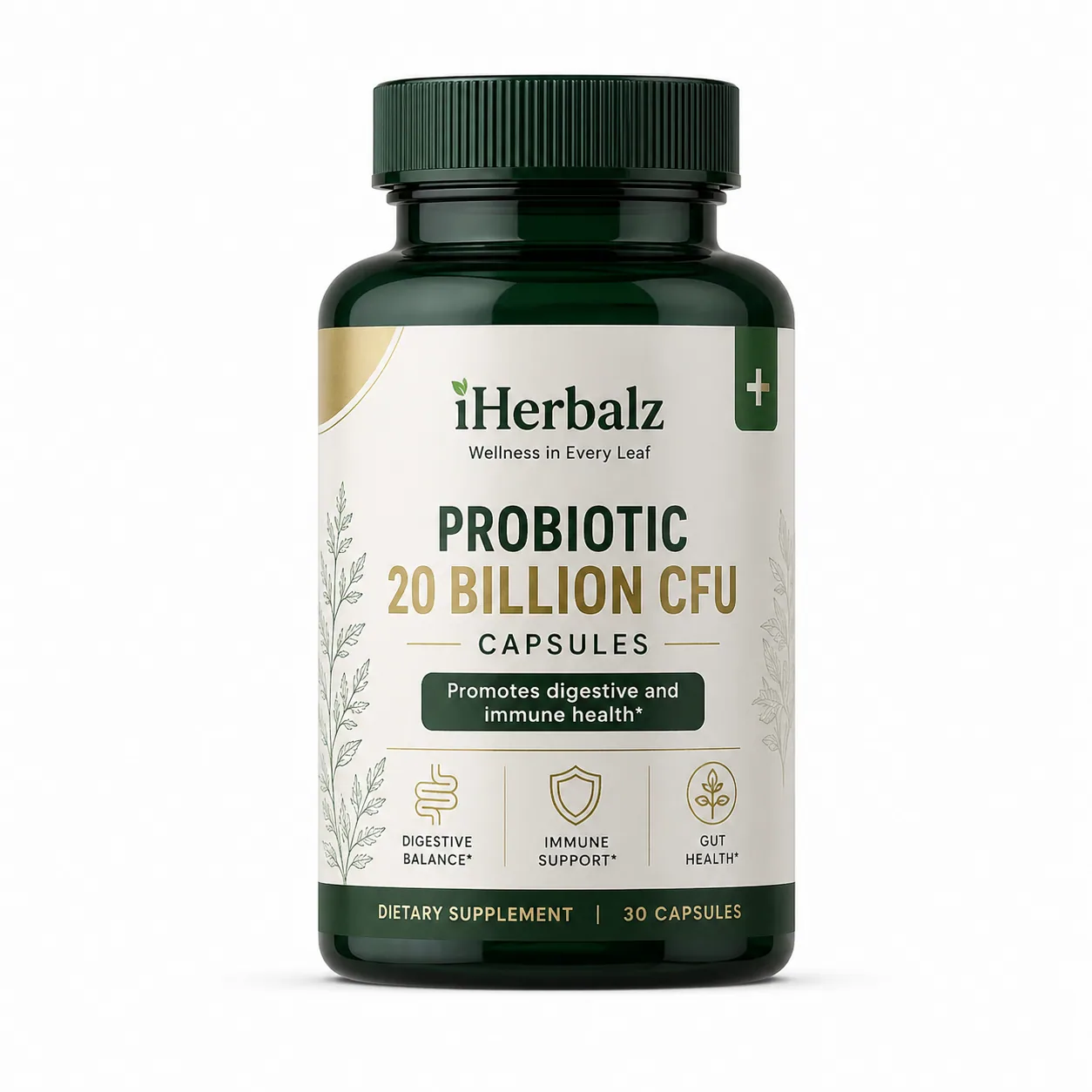
iHerbalz Probiotic delivers 20 billion CFU across 10 friendly strains, in delayed-release capsules that get them where they need to go. Refrigeration optional.
The gut-brain connection
This is the part of gut health that most people miss. Your gut and brain are connected via the vagus nerve — a literal physical highway carrying signals in both directions. Anxious gut, anxious mind. Calm gut, calm mind.
If you struggle with brain fog, low mood, or sleep that's "off" without an obvious cause — your microbiome is one of the first places to investigate. A 4-week probiotic trial costs less than one therapy session.
How to take probiotics correctly
Three simple rules:
- Take with food. Buffering by stomach contents helps survival rates.
- Same time daily. The microbiome works on rhythms — pick morning OR evening and stick to it.
- Stay consistent for at least 4 weeks. The microbiome takes time to shift. Don't bail at day 6 because nothing happened.
When you'll feel the difference
- Week 1–2: Slightly less bloating, sometimes mild gas as the new strains establish
- Week 3–4: Clearer thinking, better mood stability, more regular bathroom rhythm
- Week 5+: Stronger immunity heading into cold/flu season, fewer food sensitivities
The starter stack
If you're new to gut work, the Sleep & Stress Relief Stack (Reishi + Ashwagandha + Probiotic) is the smoothest entry. The reishi calms, the ashwagandha lowers cortisol (which feeds gut inflammation), and the probiotic does the structural work.
👉 Ready to feel the foundation shift? Explore iHerbalz Probiotic →